Midnight Curiosity
The Midnight Paradoxes
Fifty problems that have never been solved, told slowly
€13.99
Fifty problems that have never been solved, told slowly
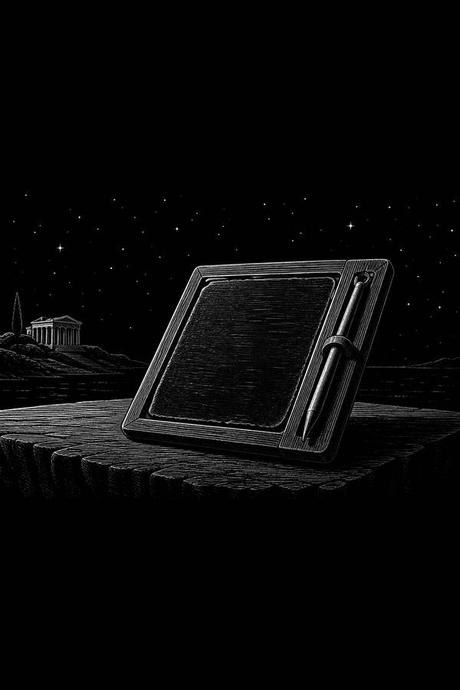
A man in Miletus writes eight words on a wax tablet and hands it to a student. The words say: this sentence is false. The student reads it once, then again, and finds he cannot put it down…
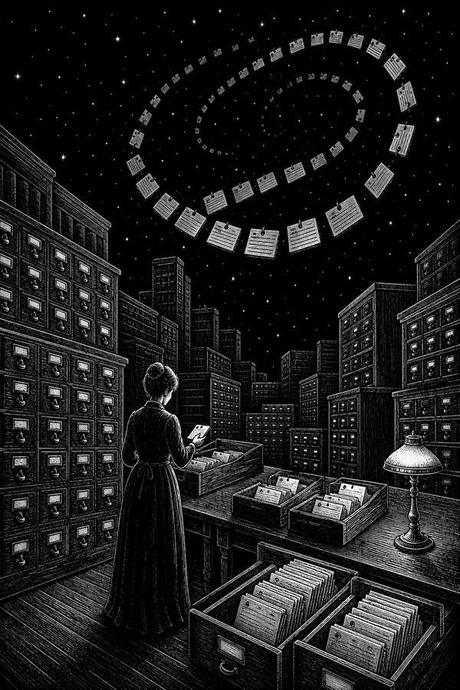
Picture a library before computers, somewhere around the turn of the twentieth century. Card catalogues everywhere, wooden drawers, small typed slips. Most catalogues are ordinary: a…
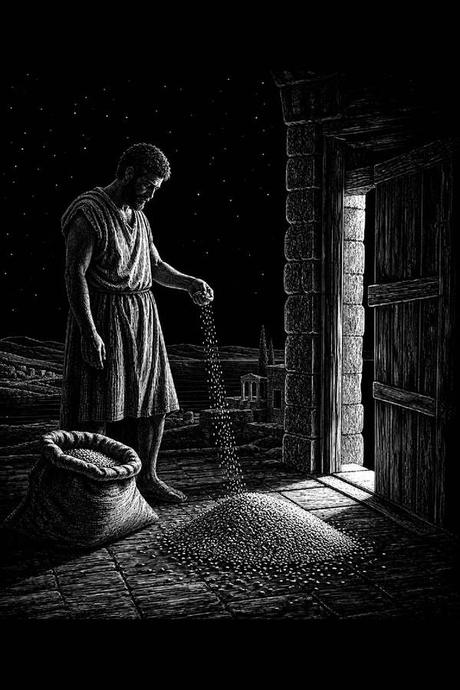
A farmer stands beside a grain store outside Miletus, in the fourth century before our era, with a sack of wheat open at his feet. He pours one grain onto the floor. It sits there, a single…
A librarian sits at a desk in Oxford, in a room lined with card catalogues, each drawer holding slips of paper that describe books in a fixed number of words. He is not thinking about…
A man sits on a metal cot in a cell with one small window set high in the wall, too high to reach. It is Sunday. A judge has just left the room, and before leaving he said something the…
A man sits at a desk in Göttingen with a sheet of paper and a list of adjectives. He is sorting words into two piles, the way you might sort letters into bills and everything else. On the…
Write a card and set it on the table by the lamp. On it, write this: "If this card is true, then the lamp will burn the whole house down." Nothing more. No claim that the house is burning.…
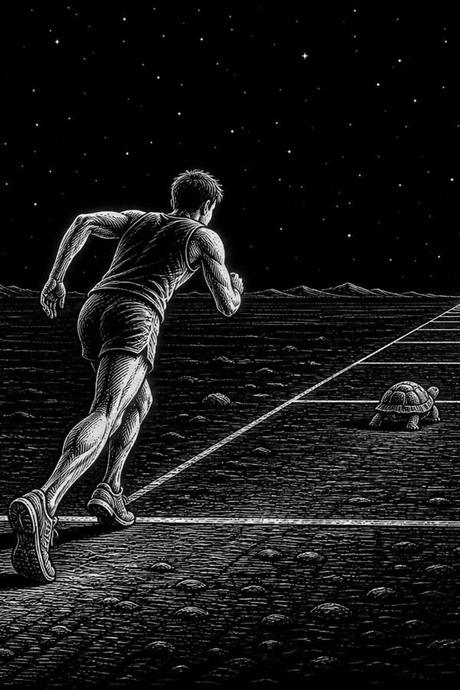
The road outside Elea is flat and dry, the kind of dust that holds a footprint for a day if no wind comes. A man stands at a starting line. A few paces ahead of him, a tortoise sits on the…
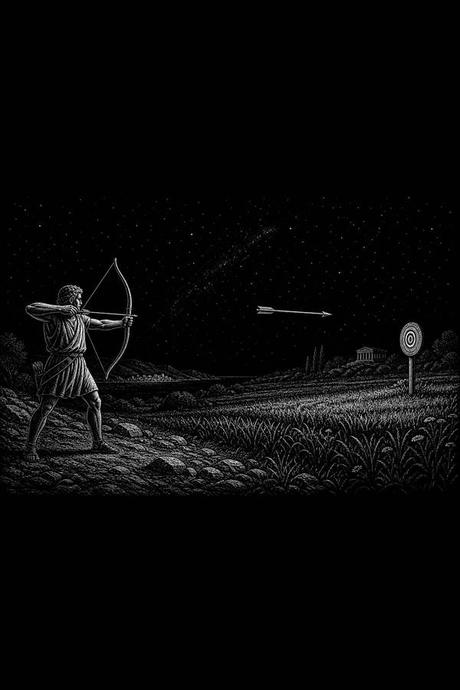
An archer stands at the edge of a field outside Elea, in the south of Italy, and looses an arrow at a target fixed to a post. The arrow leaves the string, crosses the air, and strikes the…
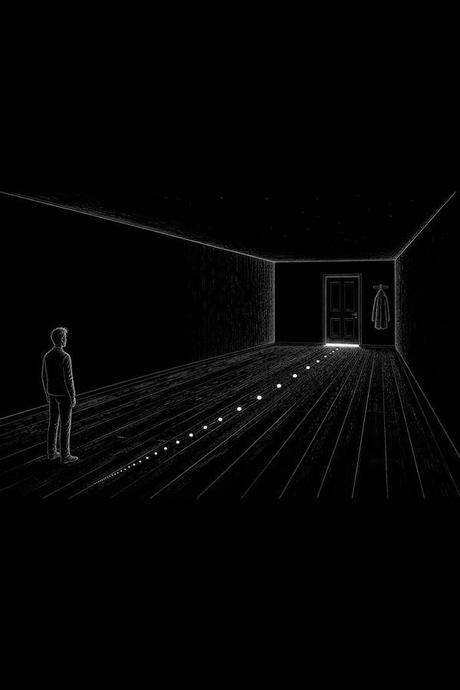
You are standing at one end of a room. The door is at the other end, maybe six metres off, closed, with a strip of light under it from the hallway. Your coat is on a hook by that door. It…
A man in Miletus writes eight words on a wax tablet and hands it to a student. The words say: this sentence is false. The student reads it once, then again, and finds he cannot put it down in his mind the way he can put down a tablet in his hand. If the sentence is true, then what it says is so, and what it says is that it is false. So it is false. But if it is false, then what it says fails to hold, and what it says is that it is false, so it is not false. It is true. The student is not confused about the words. He understands every one of them. He is stuck on what they do.
There is no crime scene here, no locked room, no falling body. Just a sentence, sitting on a tablet or a page or, later, a screen, doing nothing but pointing at itself and calling itself a liar. The room around it does not matter. It could be a lecture hall in Ionia or a kitchen table centuries later with the tablet replaced by a napkin. The sentence works the same way in the dark as it does at noon.
Here is the bite of it, stated as plainly as it can be stated. Take the sentence "this sentence is false." Suppose it is true. Then things are as it says, so it is false. Suppose instead it is false. Then things are not as it says, but what it says is that it is false, so that is exactly how things are. It is true. Either assumption forces its opposite. The sentence will not sit still long enough to be one thing. You can say it out loud to a friend tomorrow in one breath: a sentence that says of itself that it is false cannot be true and cannot be false, and yet it seems it must be one or the other.