Contents
Fifty nights







Fifty problems that have never been solved, told slowly
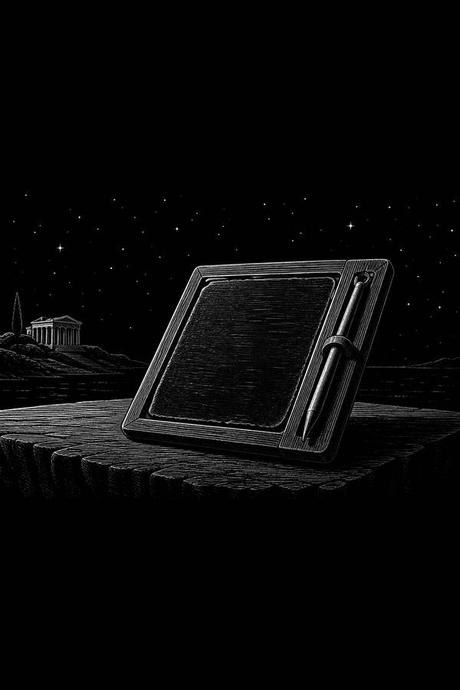
A man in Miletus writes eight words on a wax tablet and hands it to a student. The words say: this sentence is false. The student reads it once, then again, and finds he cannot put it down in his mind the way he can put down a tablet in his hand. If the sentence is true, then what it says is so, and what it says is that it is false. So it is false. But if it is false, then what it says fails to hold, and what it says is that it is false, so it is not false. It is true. The student is not confused about the words. He understands every one of them. He is stuck on what they do.
There is no crime scene here, no locked room, no falling body. Just a sentence, sitting on a tablet or a page or, later, a screen, doing nothing but pointing at itself and calling itself a liar. The room around it does not matter. It could be a lecture hall in Ionia or a kitchen table centuries later with the tablet replaced by a napkin. The sentence works the same way in the dark as it does at noon.
Here is the bite of it, stated as plainly as it can be stated. Take the sentence "this sentence is false." Suppose it is true. Then things are as it says, so it is false. Suppose instead it is false. Then things are not as it says, but what it says is that it is false, so that is exactly how things are. It is true. Either assumption forces its opposite. The sentence will not sit still long enough to be one thing. You can say it out loud to a friend tomorrow in one breath: a sentence that says of itself that it is false cannot be true and cannot be false, and yet it seems it must be one or the other.